


Frequently Asked Questions
Lintec provides loading and unloading solutions for industrial, logistics, transport and other professional applications. The product range includes mobile loading ramps, access ramps, dock plates, container loading plates, loading platforms and accessories that improve loading safety.
Based in Lappeenranta, Finland, the family-owned company Lindqvist Oy Lintec combines 40 years of experience, in-house manufacturing of steel products and aluminium solutions from the German manufacturer Altec GmbH. In addition to standard products, Lintec designs and manufactures customised loading solutions.
We design and manufacture solutions individually according to the customer's operating environment, application requirements and technical specifications. Customisation ensures that each solution meets the specific needs of the site, making loading operations safer, smoother and more efficient.
Choosing the right access ramp or loading ramp depends on the weight of the equipment being used, the loading method, the size and weight of the load, the loading height, height differences and the operating environment.
For example, forklift loading requires a different solution from driving an excavator onto a low-loader trailer.
Lintec's product range includes both lightweight aluminium access ramps and heavy-duty steel loading ramps. Lintec helps customers select the right solution for their application, taking into account safety, load capacity and efficient loading operations.
Yes. Lintec designs and manufactures customised loading solutions for applications where standard products do not meet the requirements. Custom-made products can include container loading plates, loading ramps and loading platforms.
There is increasing demand for solutions designed to meet the specific dimensions of individual sites.
The design process takes into account loading height, equipment dimensions, load requirements and operating conditions. A customised solution can improve loading safety and reduce unnecessary work steps.
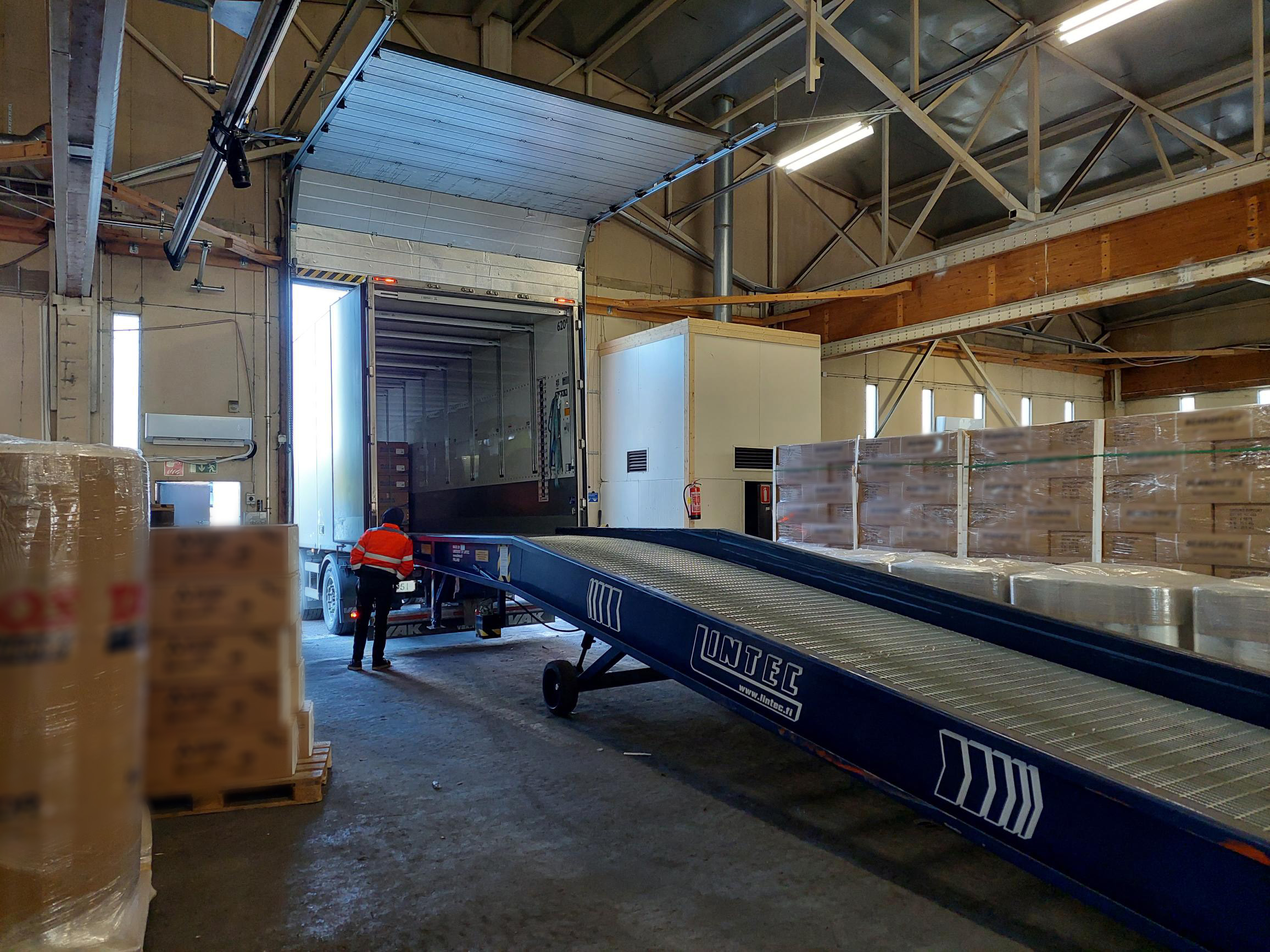
A mobile loading ramp is a cost-effective, versatile and flexible solution when loading and unloading are required at different locations or when constructing a permanent loading dock is not practical. A mobile loading ramp does not require a building permit.
The load capacity of a loading ramp is determined by the equipment used and the load being transported. For forklift operations, for example, the forklift's own weight, the weight of the load and the axle and wheel loads must all be considered.
The length and gradient of the ramp, as well as the distribution of the load, also influence product selection. Lintec helps assess the appropriate load capacity rating and ensures that the selected loading ramp is suitable for its intended use.
A correctly dimensioned loading solution reduces potential hazards during loading operations and makes it easier to move goods and machinery. A safe access ramp, loading ramp or container loading plate provides a controlled transition between surfaces at different heights.
The driving surfaces and grated platforms feature anti-slip surfaces that are easy to clean, improving safety and functionality. Hot-dip galvanising provides additional durability.
Lintec's loading solutions can also streamline work processes, reduce unnecessary handling and improve the usability of loading areas. The most suitable solution is always selected according to actual operating conditions.
You can request a quotation from Lintec for both standard products and customised loading solutions.
Lintec's specialists will help you find the most suitable product or solution for your application, whether it is a standard product or a specially designed solution.
Mobile Loading Ramps
A mobile loading ramp is particularly suitable for warehouses, terminals and industrial loading areas where a flexible loading connection is required without a permanent loading dock.
Lintec's steel mobile loading ramps are designed for heavy-duty professional use. The range includes, for example, 12-metre-long models with load capacities of 7,000–12,000 kg. A mobile loading ramp enables loading at different locations and makes forklift traffic easier to organise. The ramps have stepless height adjustment for the most common loading heights, from 850 to 1,600 mm.
Yes. Lintec's mobile loading ramps are specifically designed for forklift operations when loading warehouses, terminals and transport vehicles. They can be used for loading trailers, semi-trailers, rear-loading trucks and shipping containers.
When selecting a ramp for forklift use, the combined weight of the forklift and its load, axle loads, wheel loads and ramp gradient must be considered. Lintec offers mobile loading ramps with load capacities of 7,000–12,000 kg. Suitability must be verified against the technical specifications of the forklift being used.
The length, dimensions and features of a mobile loading ramp are selected according to the loading height, equipment used and required approach angle. The greater the height difference, the longer the ramp generally needs to be to ensure safe and smooth operation.
Lintec normally keeps standard mobile loading ramps in lengths of 9 and 12 metres in stock. Height ranges and load capacities vary by product. The correct dimensions should be confirmed before ordering.
The main advantage is that the same loading solution can be used at different locations. It accommodates different loading heights, is affordable and can also serve as an access ramp. Mobile loading ramps have good resale value if loading requirements change. They can reduce the need for permanent loading structures and improve operational flexibility.
Lintec's mobile loading ramps are suitable, for example, when trucks are loaded at changing locations or loading arrangements are modified as operational needs change. A fixed loading ramp is often better suited to continuous loading at one location.
You can buy or rent a mobile loading ramp from Lintec according to your needs. Purchasing is cost-effective for continuous use, while renting offers flexibility for seasonal operations, projects and temporary loading requirements.
Safe use requires sufficient load capacity, a stable supporting surface, correct positioning and compliance with the manufacturer's instructions.
For forklift operations in particular, the total equipment weight, ramp gradient and securing the vehicle against movement must be considered. Lintec's loading ramps are designed according to the requirements of the application to make loading as safe and efficient as possible.
Mobile and Fixed Access Platforms
An industrial access platform is a loading solution that provides a route for vehicles or machinery between surfaces at different heights. Access platforms are used in warehouses, industrial facilities and logistics centres.
Lintec designs and manufactures both mobile and fixed access platforms. They can be dimensioned for forklifts, vans and other transport vehicles. A properly designed access platform makes loading easier and improves the functionality of the working environment.
A fixed access platform is installed permanently where a continuous connection between different levels is required. A mobile access platform can be used more flexibly at different loading locations.
Lintec manufactures both options according to customer requirements. A mobile access platform is suitable for changing loading arrangements, while a fixed solution serves continuous loading operations at the same location.
Yes. Lintec manufactures access platforms with customised dimensions, load capacities and structures. The platform's length, width, height and driving surface are designed according to the equipment used and the loading environment.
Lintec has supplied mobile access platforms ranging from 2 to 14.5 metres in length, as well as fixed loading ramps of various lengths according to customer requirements. Customised design enables solutions for demanding industrial loading environments.
The platforms can be designed for:
Passenger cars and vans
Forklifts
Trucks
Heavy machinery and equipment
A properly designed access platform provides controlled movement between surfaces at different heights. It reduces risks associated with difficult height differences and makes equipment movement easier in the loading area.
Lintec's access platforms can incorporate suitable driving surfaces, safety railings and the required supporting structures. Safety depends on the platform's load capacity, gradient and structure matching its actual intended use. The high-grip open-grid driving surface also helps clean tyres during use. The grating is highly wear-resistant.
Container Loading Plates and Container Ramps
A container loading plate is a steel loading solution that allows a forklift or other suitable handling equipment to travel between a shipping container and the loading area. It makes container loading and unloading easier, particularly when there is a 165 mm height difference between the container floor and the ground.
Lintec manufactures container loading plates in Finland with standard load capacities of 6,000, 8,000 and 12,000 kg. The range also includes customised container loading plates and ramps.
Safe forklift loading of a shipping container requires a container loading plate with sufficient load capacity, a stable surface and an access route suitable for the application.
Lintec's container loading plates use serrated, anti-slip open-grid decking to improve traction. Products also have model-specific handling and locking arrangements. When selecting a container loading plate, the combined weight of the forklift and load, wheel loads and container floor height must be considered.
The load capacity is selected according to the forklift used, the transported load and the loads they impose. The weight of the goods alone is not sufficient for choosing the correct product.
Lintec's standard range includes container loading plates with capacities of 6,000, 8,000 and 12,000 kg. The 6,000 and 8,000 kg models, for example, are 1,500 mm long and 2,200 mm wide. The heavier 12,000 kg model is 1,750 mm long and 2,300 mm wide.
Demanding loading environments may require a longer, wider or specially constructed container loading plate. The solution depends on factors such as container height, the forklift used, load dimensions and available space.
Lintec manufactures customised container loading plates with features such as safety edges, extended horizontal sections and different handling arrangements. A longer horizontal section allows the forklift to level out before entering the container. The structure is designed according to the application.
Yes. Lintec designs and manufactures container loading plates and ramps according to customers' own dimensions and operating requirements. A customised solution may be needed because of an unusual loading height, a special container or a heavy load.
Lintec's customised solutions include loading plates for refrigerated containers, ramps with safety edges and container ramps with long horizontal sections. All Lintec container loading plates and ramps are manufactured in Finland.
Access Ramps and Loading Ramps
Aluminium access ramps are used to load machinery, small equipment, vehicles and other mobile equipment onto transport vehicles or between surfaces at different heights.
Lintec offers aluminium loading ramps for different loading and transport requirements. Selection takes account of the equipment being loaded, the loading height and the intended use.
Lintec's range includes aluminium ramps manufactured by the German company Altec GmbH, from lightweight van ramps to heavy-duty loading solutions. For example, the ABS range has load capacities of 250–700 kg, while heavy-duty VFR models have capacities exceeding 58,000 kg. The appropriate model is selected according to the equipment and application.
The securing method depends on the ramp structure and loading application. Loading ramps may use purpose-designed securing hooks, locking mechanisms or other manufacturer-approved securing arrangements. The ramps must be prevented from moving or becoming detached during loading.
Aluminium withstands moisture and changing weather conditions well, making these ramps suitable for many outdoor applications. In winter, however, snow, ice and dirt can reduce traction. The condition, cleanliness and secure attachment of the ramps must be checked before use.
When selecting loading ramps for machinery, consider the machine's total weight, wheelbase or track configuration, loading height and required approach angle. The machine's centre of gravity and axle loads also affect safe loading.
Aluminium ramps can be used to load many types of small and industrial machinery when designed for the relevant load and equipment type. For wheel loaders, mini excavators and other heavier machines, particular attention must be paid to load capacity, load distribution and suitability for the intended operating conditions, including pneumatic-tyred, wheeled and tracked equipment.
Lintec's ramp range includes solutions for light machinery, excavators and other heavy equipment. The AVS and VFR ranges, for example, offer options for different load-capacity requirements. Lintec helps select ramps suitable for the machine's dimensions and loading requirements.
The same ramps can be used for several machines if each machine's weight, dimensions and imposed loads meet the ramps' technical requirements. Differences in wheelbase, wheel loads and track configurations can affect suitability.
Lintec's aluminium ramp range offers various lengths, widths and load capacities. When ramps are used for different machines, suitability should be checked against the heaviest and most demanding equipment.
Ramp length depends on the loading height, the machine's characteristics and a safe approach angle. A longer ramp generally provides a gentler gradient, which is particularly helpful for loading machines with low ground clearance. The longer the ramp, the gentler the gradient and the safer it is to use.
Lintec offers aluminium ramps in different lengths, and some models can be dimensioned to customer requirements. In addition to length, load capacity, width, support and compatibility with the equipment being loaded must be checked.
Advantages of aluminium ramps include relatively low weight, good corrosion resistance and easy handling. Aluminium ramps can be manufactured for different load-capacity classes and are used for both light and heavy equipment.
Lintec's Altec range includes folding ramps, spring-assisted models and customised heavy-duty ramps. The right solution is always selected according to the application and the equipment's technical requirements.
Increasingly, we design ramps to customers' own dimensions.
Dock Plates and Loading Bridges
A dock plate or loading bridge spans the gap between a loading dock and a truck or other transport vehicle, allowing goods to be moved between the two levels. Dock plates and loading bridges are used particularly in warehouses, terminals, logistics centres and industrial loading areas.
Lintec offers aluminium and steel loading bridge solutions for different load capacities and height differences. A correctly dimensioned loading bridge improves loading efficiency and safety.
Selection takes account of the dock height, vehicle loading heights, handling equipment and load size. It is also necessary to determine whether a fixed or mobile loading bridge is required. Smaller ramps can also be moved easily by hand.
Lintec offers several loading bridge models for different applications. For example, the three-section mobile MBD loading bridge is suitable where the vehicle loading floor is considerably higher than the dock surface. The greater the height difference, the longer the ramp should be for safe operation. Selection also depends on whether a fixed installation or a laterally movable model is required.
An aluminium loading bridge is often lighter to handle and offers good corrosion resistance. A steel loading bridge may be appropriate for heavy-duty use or fixed loading installations.
Lintec offers both alternatives. In addition to material, selection depends on load capacity, loading height, frequency of use and attachment method. The appropriate product is selected according to the technical requirements of the site. Lightweight loading bridges are mechanically operated and spring-assisted, requiring no electricity.
Yes. A loading bridge provides a safe connection between the loading dock and a vehicle when their heights differ.
Lintec offers loading bridge models for different height differences. For example, the three-section MBD loading bridge is designed for situations where the vehicle loading floor is clearly higher than the dock. The appropriate bridge is selected according to the height difference, equipment and load.
Installing a loading bridge on an existing dock is often possible if the dock structure, fixing points and load-bearing capacity are suitable for the selected product.
Lintec also offers fixing plate kits for loading bridges where the edge of the loading dock does not have a suitable steel beam. Before installation, the dock's structural suitability and the technical requirements of the selected loading bridge must be verified.
Wheelchair and Threshold Ramps
A wheelchair ramp for a van is selected according to the vehicle floor height, door opening dimensions, wheelchair characteristics and required load capacity.
Ramps may be portable or permanently installed.
Lintec's range includes, for example, three-section folding ramps in the RLK and RRD ranges. The three-section design allows a longer ramp to fit into a lower interior space. A longer ramp also provides a gentler gradient. A side-swinging option is available in the RRD range.
A wheelchair ramp enables a wheelchair to move between surfaces at different heights. A threshold ramp is intended primarily for smaller height differences, such as door thresholds.
Lintec offers both solutions. When selecting a wheelchair ramp, length, gradient and usability are important. For threshold ramps, the main considerations are threshold height and the width of the passage.
Yes. Lintec offers threshold ramps that can be dimensioned according to customer requirements. For example, the aluminium SBK threshold ramp is designed for small height differences and is also available in customised dimensions.
When selecting a threshold ramp, the height difference, required width and load must be specified. A correctly dimensioned threshold ramp makes it easier to pass through doorways and over other low obstacles.
Wheelchair ramp safety depends on correct dimensions, sufficient load capacity, a high-grip surface and proper attachment. The ramp gradient must be suitable for the user and the wheelchair being used.
Lintec's range includes permanently installed RAS-W vehicle ramps and folding RLK-Z and RRD models. Selection must also consider whether assistance is needed and which accessibility requirements apply to the location.
Outrigger Pads
An outrigger pad distributes the load imposed by a crane's support leg over a larger surface area. This can reduce localised ground pressure and improve stable support for the equipment. The pads do not absorb water or fracture during use.
Lintec offers outrigger pads for different equipment-support requirements. A correctly dimensioned pad is important for cranes and other machines fitted with outriggers. However, the ground's load-bearing capacity must always be assessed separately.
The size is selected according to the maximum outrigger load, ground-bearing capacity and required supporting area. The lower the ground's bearing capacity, the larger the supporting area may need to be.
Lintec can help identify a suitable outrigger pad. In addition to pad dimensions, material strength and the equipment manufacturer's instructions must be considered. A large pad alone cannot compensate for insufficient ground-bearing capacity.
An outrigger pad can also be used on soft ground if the ground-bearing capacity and support arrangement have been verified. The pad distributes the load over a wider area, but it cannot by itself prevent equipment from sinking into poorly supporting ground.
Lintec can help identify a suitable pad for different operating conditions. In demanding lifting operations, ground-bearing capacity and the necessary support must be assessed as part of the lifting plan.
Trailer Support Stands
An additional support stand helps support the front of a semi-trailer during loading and unloading. Additional support is particularly important when the semi-trailer is detached from the tractor unit and loads change as a forklift moves inside the trailer.
Lintec's range includes the Jalkarenki trailer support stand, designed to support semi-trailers during loading. A correctly selected and positioned support stand improves loading control and helps reduce the risk of trailer tipping.
The need for an additional support stand is particularly important to assess when a semi-trailer is loaded or unloaded without a tractor unit attached. Forklift movement and changes in the load's centre of gravity can impose significant loads on the trailer's supporting structures.
Lintec's Jalkarenki support stand provides a support solution designed for this application. The need for and suitability of additional support must always be assessed according to the trailer structure, loads and manufacturer's safety instructions.
Wheel Chocks
Wheel chocks help prevent unintended movement of trucks, trailers and other vehicles during loading and unloading. They are an important part of safe loading operations, particularly in warehouses, terminals and loading docks.
Lintec's range also includes wheel chocks, with versions designed for winter use. Anti-slip mesh welded to the underside helps prevent sliding on slippery and wintry surfaces. Three versions are available, including models with a 360-degree rotating warning flag or a visible STOP sign and convenient carrying handle.
The correct wheel chock is selected according to vehicle size, tyres, ground conditions and operating environment. Wheel chocks must be used in accordance with the vehicle's other immobilisation methods and applicable safety instructions.